
How bulk daily meal supply starts
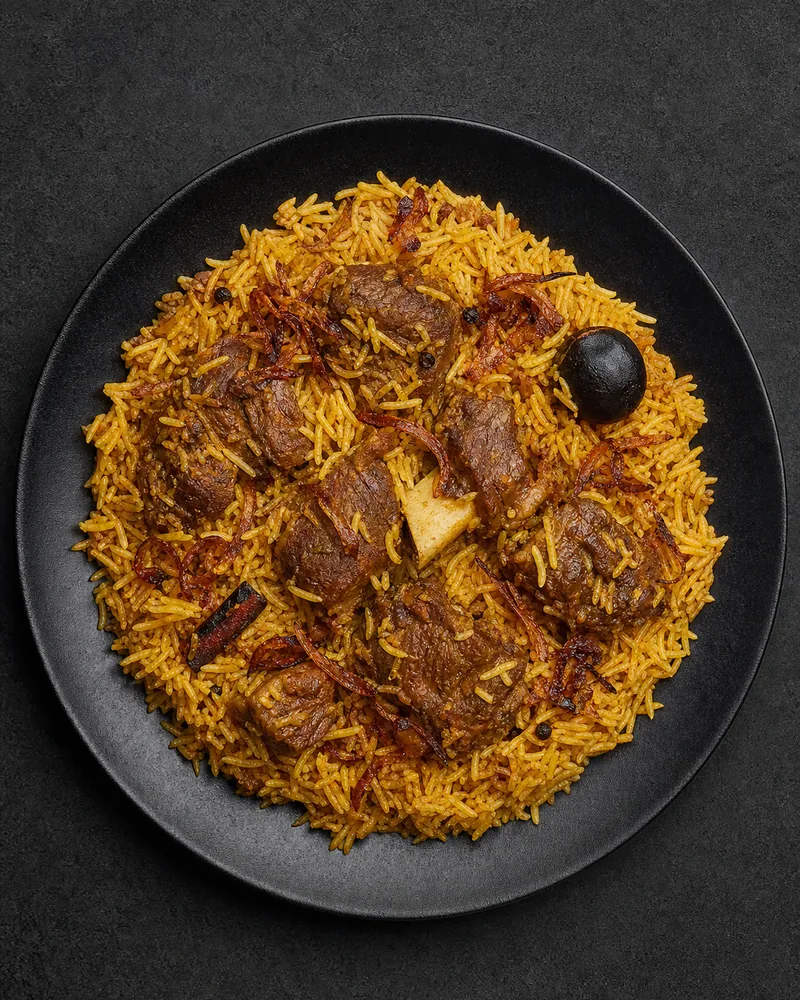
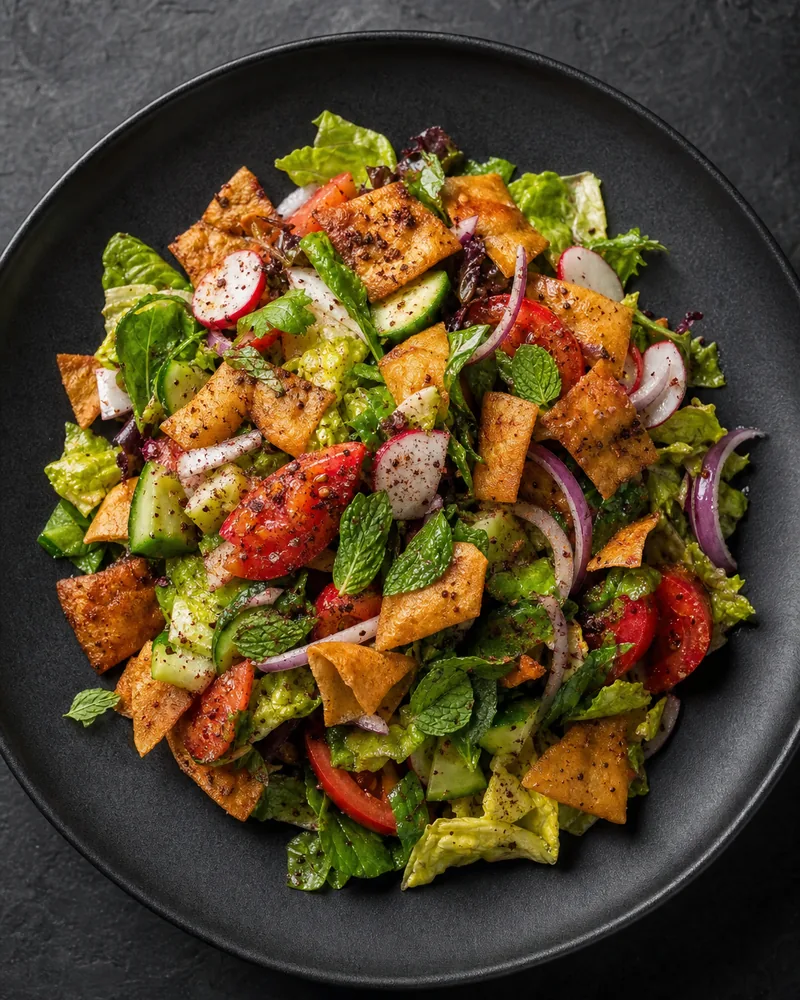
Setting up daily bulk meal supply for a company begins with a short brief, not a long form. An operations, admin or procurement lead tells us the daily headcount, the delivery site or sites across Abu Dhabi, Dubai or Sharjah, meal times, and any dietary patterns among colleagues. From that brief we propose a rotating menu drawn from our 136 dishes across 16 courses, sized to daily volume rather than a one-off event.
- Step 1: Brief - headcount, delivery windows, sites and dietary needs are confirmed with our team.
- Step 2: Tasting - a free tasting is arranged before any booking, so the buyer and relevant colleagues can assess the dishes proposed for daily rotation.
- Step 3: Delivery - once the menu and schedule are agreed, our own delivery, setup and serving team begins daily service on the confirmed date.
We quote after the tasting, once volumes, sites and service style are fixed. Because we have supplied 22 client organisations since 1998, we can usually confirm a workable schedule within a short number of exchanges rather than repeated site visits. For companies with more than one office or delivery point across the UAE, we coordinate a single schedule so every site receives meals within the same agreed window, with one point of contact managing the daily order.
This staged approach - brief, tasting, delivery - means nothing is committed to before the food itself has been tried. It also gives the buyer a chance to confirm portion sizes, packaging for bulk delivery, and how quickly the rotation can adjust if headcount changes from week to week. Ongoing service is reviewed periodically rather than fixed rigidly, so the daily meal count can flex as the company's own numbers change.
Daily, weekly, monthly or annual meal supply
Your supply period and delivery frequency are separate decisions. An annual requirement may cover selected working days; a short project may need several meal periods each day. Share both so the proposal reflects the service you actually need.
- Daily service: meal periods, working days, expected attendance and delivery windows.
- Weekly requirements: dates, days of service and meals needed each day.
- Monthly supply: start date, proposed end or review date and menu preferences.
- Annual or longer-term supply: proposed period, locations, expected volume, approval process and scheduled breaks.
For larger headcounts, provide meals per service rather than only total employees. Include each location and delivery window, packaging or serving requirements and dietary needs. Ask for a proposal that identifies the included meals, deliveries, equipment and service arrangements so you can compare equivalent scope. Availability, menu and final terms require confirmation.
Food safety, traceability and daily temperature control
Bulk daily meal supply carries more food-safety responsibility than a single event, since the same kitchen is producing over 7,000 meals a day for delivery across Abu Dhabi, Dubai and Sharjah. Our kitchens in Abu Dhabi Industrial City (ICAD II) operate to ISO 22000 and HACCP standards, covering everything from ingredient sourcing and storage through to preparation, cooking and packing for transport.
- Ingredients are received, checked and stored under documented conditions before any preparation begins.
- Cooking and cooling stages follow HACCP-controlled temperature points, with records kept for each batch produced.
- Meals are packed and transported in temperature-controlled conditions to hold safe serving temperatures until delivery.
- Every batch is traceable back to its preparation date and kitchen line, supporting review if a query is raised by any client organisation.
This matters most for bulk daily supply because volume and consistency have to hold every single day, not just once. An admin or procurement lead responsible for daily meals for colleagues needs assurance that food safety does not vary between a Sunday and a Thursday delivery, and our HACCP and ISO 22000 systems are designed to keep that consistency across every batch, every day, regardless of order size.
We are also able to share our HACCP certificate, ISO 22000 certificate, trade licence and a capability statement on request, so a buyer's own compliance or facilities team can review our food-safety documentation before daily service begins, and periodically afterwards as part of ongoing service. This documentation review typically runs alongside the tasting stage, so hygiene checks and menu approval happen in the same conversation rather than as separate processes.
Delivery windows, setup and collection
Daily bulk meal supply depends on reliable delivery, which is why we run our own delivery, setup and serving team rather than relying on third parties. For companies across Abu Dhabi, Dubai and Sharjah, delivery windows are agreed at the brief stage and held consistently once daily service begins, so meals arrive within the same window each day regardless of site location.
- Delivery times are set to match the company's own meal times, with separate windows arranged where a site runs more than one meal period per day.
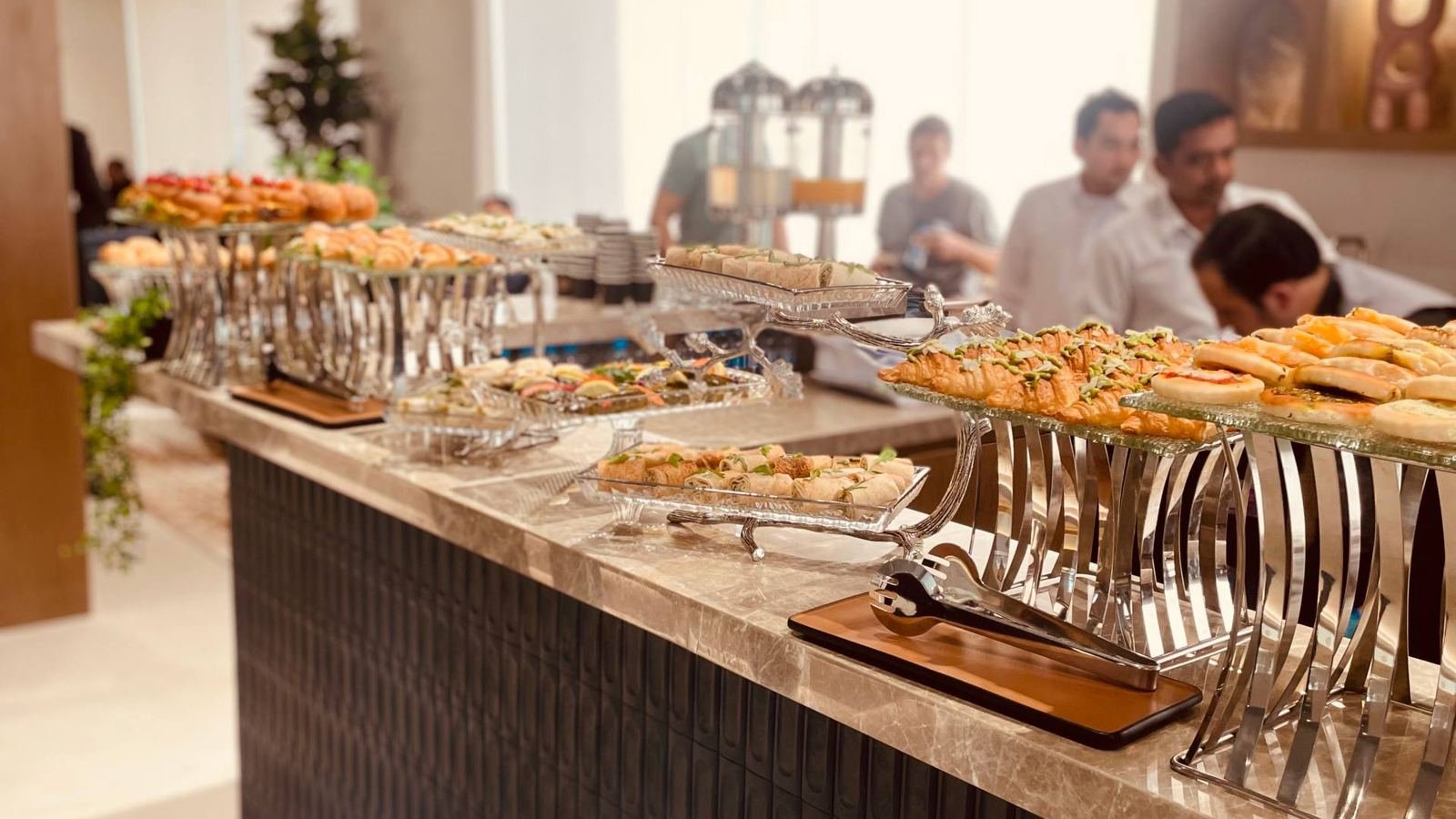
- Our own team handles setup at the delivery point, including serving equipment where bulk trays or a serving line is required.
- Serving staff can be provided where the site needs meals served rather than simply dropped off.
- Collection of trays, containers and serving equipment is scheduled after each meal period, keeping the delivery point clear.
Because delivery, setup and serving are handled by our own team rather than a subcontracted courier, there is a single point of accountability if a delivery window needs to shift, for example around a public holiday or a change in a company's own operating hours. This also allows us to coordinate multi-site delivery for companies with more than one office or building across the three emirates, with one schedule managed centrally rather than separate arrangements per site.
Setup requirements are confirmed during the brief and tasting stages, so the buyer knows in advance whether the arrangement will be a served line, self-service bulk trays, or individually packed meals, and what space or equipment the delivery point needs to provide. Any change to headcount, site address or meal timing is handled through the same point of contact who managed the original brief, keeping daily supply consistent as the company's own requirements change.
Why companies choose Dana Prime for bulk daily meals
Dana Prime has operated since 1998, and our kitchens in Abu Dhabi Industrial City (ICAD II) now cook more than 7,000 meals a day for 22 client organisations across Abu Dhabi, Dubai, Sharjah and the wider UAE. That volume is produced daily, not scaled up for a single event, which is the core requirement for a company sourcing bulk meal supply on an ongoing basis rather than for a one-off occasion.
- Own kitchens, own delivery team and own serving staff, so there is a single point of accountability across the whole daily meal supply chain.
- 136 dishes across 16 courses, giving enough range to rotate menus across a week or month without repetition.
- ISO 22000 and HACCP standards applied consistently across daily production, not only for larger or higher-profile orders.
Every new daily meal supply arrangement begins with a free tasting before any booking is confirmed. This lets an operations, admin or procurement lead assess the actual dishes proposed for daily rotation, alongside colleagues who will be eating the meals, rather than committing based on a menu list alone. We quote after the tasting, once headcount, sites, delivery windows and service style are all confirmed.
References are available on request. Given that Dana Prime already supplies 22 client organisations across the UAE, a buyer evaluating bulk meal catering for companies can ask to speak with an existing client operating at a comparable scale or in a comparable sector, as part of due diligence before committing to ongoing daily service. This, together with our documentation pack covering HACCP, ISO 22000, trade licence and a capability statement, is intended to give a buyer everything needed to make a properly informed decision before the first delivery.